ORE/OPSSell Ores Values

Start · UPDATED SEPTEMBER 1, 2026

Sell Ores Beginner Loop: Roll, Place, Mine, Sell

A version-safe first-session route based on the official game loop, without invented ore values.

Short answer

Place the ore you can mine now, keep drones working, sell before an upgrade bottleneck, and compare upgrades by observed time saved—not by an uncited value table.

Official Sell Ores Values platform screenshot
Official Sell Ores Values image. Numbers visible in promotional artwork may differ from the current game.
01

Use the official loop as your checklist

The official Roblox description defines the core sequence: place and mine ores, upgrade drones and expand the base, then sell ores for money. Keep those as separate checkpoints so you can tell whether mining speed, drone throughput, storage, or selling is actually slowing the run.

The same listing says the base earns while you are offline and players are not kicked for being AFK. That confirms the systems exist, but it does not publish the rate. Record a before-and-after balance under the same conditions before treating any claimed rate as fact.

Sell Ores settings menu with the code redemption field visible
Third-party gameplay capture published by AllThings.How; menu text should be rechecked after game updates.
02

Do not buy an upgrade by price alone

An upgrade is useful when it removes the current bottleneck. Time one short cycle before and after the purchase: ore waiting to be mined points to mining capacity, ore waiting for a drone points to transport, and a full output queue points to selling or storage.

This site will not publish ore, drone, or floor numbers until they are captured in the current build with a version and screenshot receipt.

03

Codes are dated evidence

The official description currently names RELEASE and EXPANSION. Treat that as a dated observation, not a permanent promise: test the in-game redemption flow and record the exact result before depending on a reward.

If the official description changes or a code fails, the current game result outranks an older list.

04

What this answer covers for Sell Ores

In use, the official Sell Ores description confirms a loop of placing and mining ores, upgrading drones, expanding a base, selling output for money, and earning while offline. At this point, it also says the experience does not kick players for being AFK. In-game, it does not publish a complete current value table or an offline-income formula. For roll, place, mine, sell, this defines the feature scope without inventing the missing mechanics.

During play, a promotional ore value, a player estimate, or a number copied from another guide is not a verified economy capture. After the route, the current game UI and a dated capture are required before a numerical claim is published. For roll, place, mine, sell, leave any missing number or condition open until the current game displays it.

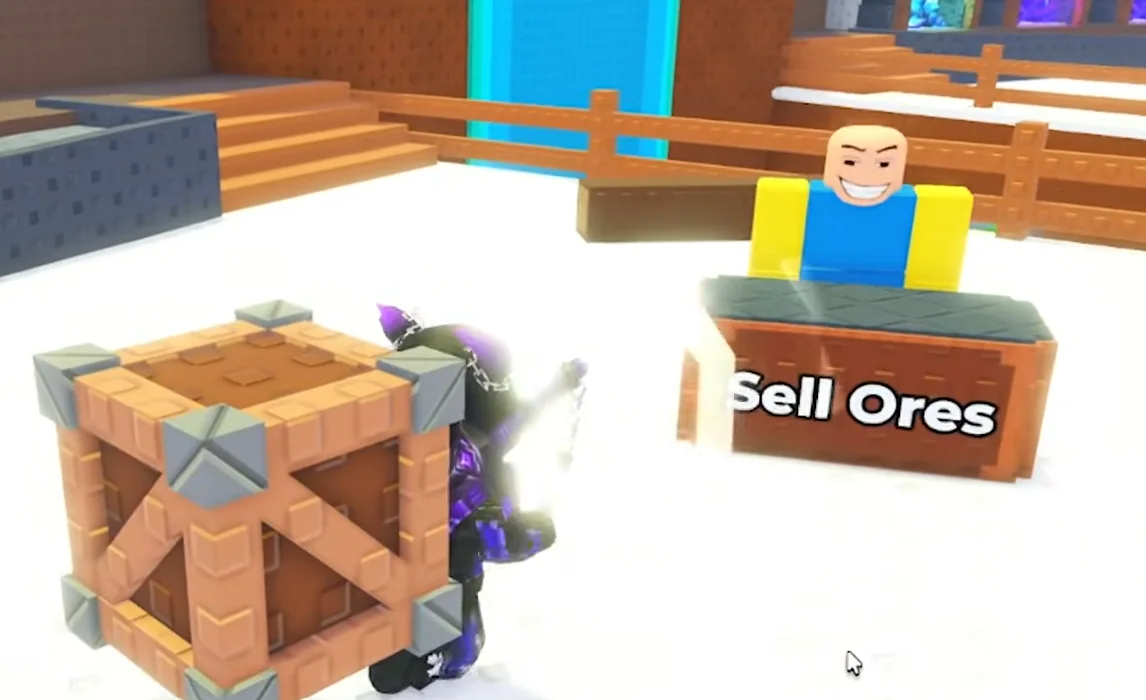
Sell Ores player approaching the Pet Shop and Lucky Block display
Third-party gameplay capture of the Pet Shop area, published by AllThings.How.
05

Run one controlled check for Sell Ores

For the record, before applying the advice in roll, place, mine, sell, capture the current platform, game identity or version, and original state. In a comparison, perform one complete route without changing unrelated settings, equipment, upgrades, or session conditions. Under this method, capture the result and describe only what changed.

For the next step, repeat the same check when the first outcome looks unusual. Before relying on it, a single result can identify a question, but repetition is what separates a stable instruction from luck, a temporary server state, or a misunderstanding of the interface.

06

Avoid cross-version shortcuts

For context, a guide with the correct game name can still describe Early Access, another platform, a private test, or a same-name experience. For reference, confirm the creator or developer, platform, place or application identity, and checked date before treating the instructions as current.

In this guide, if an older guide supplies a useful question, reproduce it in the current build. For this route, do not silently copy the old answer. During a check, preserve conflicts when the old and current states differ so the update history explains why the recommendation changed.

07

What requires stronger evidence

On this page, prices, income rates, probabilities, rarity odds, best rankings, unlock requirements, and universal thresholds need more than a feature description. Under this method, they require the exact displayed field, unit, surrounding state, current identity, and a reproducible observation or an explicit official statement.

The roll, place, mine, sell page therefore stays conservative where those inputs are missing. Before relying on it, it is better to give a reliable method and a clearly bounded answer than to create false precision that breaks as soon as a player reaches a different version or state.

08

When an update changes the answer

For this route, recheck the affected section after an official update names the relevant system, the interface wording changes, or two current observations disagree. During review, keep unrelated sections intact; broad rewrites make it harder to identify which source actually changed.

After the route, a useful correction includes the page URL, platform, current identity or version, disputed sentence, date, and a screenshot or repeatable route. In a comparison, the previous observation remains in history so outdated information is distinguishable from an original research error.

09

Compare results without moving the goalposts

For clarity, use the same start point, route, duration, and game state when comparing two outcomes. In a retest, change one variable, preserve both results, and log failed attempts. For the next step, if a patch or server change interrupts the comparison, end the test rather than averaging incompatible sessions.

On this page, do not discard an inconvenient outcome merely because it conflicts with the expected answer. At minimum, the disagreement may reveal a cap, hidden dependency, platform difference, or wording problem that deserves its own check.

10

Five-minute field note

In testing, a short session can still improve roll, place, mine, sell: confirm identity, take one initial capture, complete one route, take one result capture, and write one sentence about the observed difference. As a precaution, do not extend that sentence into a universal rule.

On this page, a dated, narrow observation can be combined with later tests and compared after updates. During review, an undated screenshot or memory has less maintenance value even when it happens to show the right result.

11

Use roll, place, mine, sell in a complete session

During play, begin the current roll, place, mine, sell session by naming the one decision the page should help with. In a short session, follow time one complete ore-to-sale cycle, then identify the queue that waits, and finally change one upgrade category. For this route, if the route breaks, stop at the first mismatch and save the visible state instead of forcing the remaining steps against a different platform, build, account, or game identity.

Close the roll, place, mine, sell session with a short comparison between the opening state and the result. In a short session, note what stayed unchanged as well as what moved. At this point, that negative evidence can rule out a tempting explanation, protect the next test from repeating the same mistake, and make a later correction understandable to someone who did not watch the original run.

12

When to use this roll, place, mine, sell guidance

In the result, use the recommendation in roll, place, mine, sell only when its named initial conditions match the current session. In the current build, if the route, platform, version, creator identity, available menu, or visible system differs, stop at the mismatch and return to the current client instead of forcing the remaining steps.

For this route, the guide is successful when it helps a reader choose the next test or action with less uncertainty. Before relying on it, it is not required to produce a confident answer for every hidden rule. In the result, a clearly stated unknown protects the rest of the page from being contaminated by a guess.

For roll, place, mine, sell, finish by saving the opening state, the action taken, and the observed result. In testing, those three details make a later update much easier to contrast without relying on memory. With this setup, keep them together when sharing a correction so another player can reproduce the same check.

Sources

Official Roblox experience

AllThings.How current gameplay guide

Sell Ores Wiki drone guide

Sell Ores Roblox Wiki beginner guide